
Sex Offender Checks in Calhoun County
The Illinois State Police Offender Registry is the main public channel for a Calhoun County sex offender search. ISP says the data is refreshed each day. Searchers can work from a name, birth date, city, ZIP code, county, status, homeless designation, offender type, or a neighborhood map. Selecting Calhoun from the county list is often more useful than relying on a village name, since postal addresses and village limits do not always line up.
The county website does not publish a separate local offender list or alert application. Its Sheriff forms page directs visitors to the ISP registry, making that link the documented local starting point. Call the Sheriff when a Calhoun County resident is unsure which agency handles an in-person registration duty. Municipal residents usually report to a police chief, while residents outside a municipality generally report to the Sheriff, but the sparse village police structure here makes direct confirmation important.
The county source image below shows where the Sheriff places its official registry route.
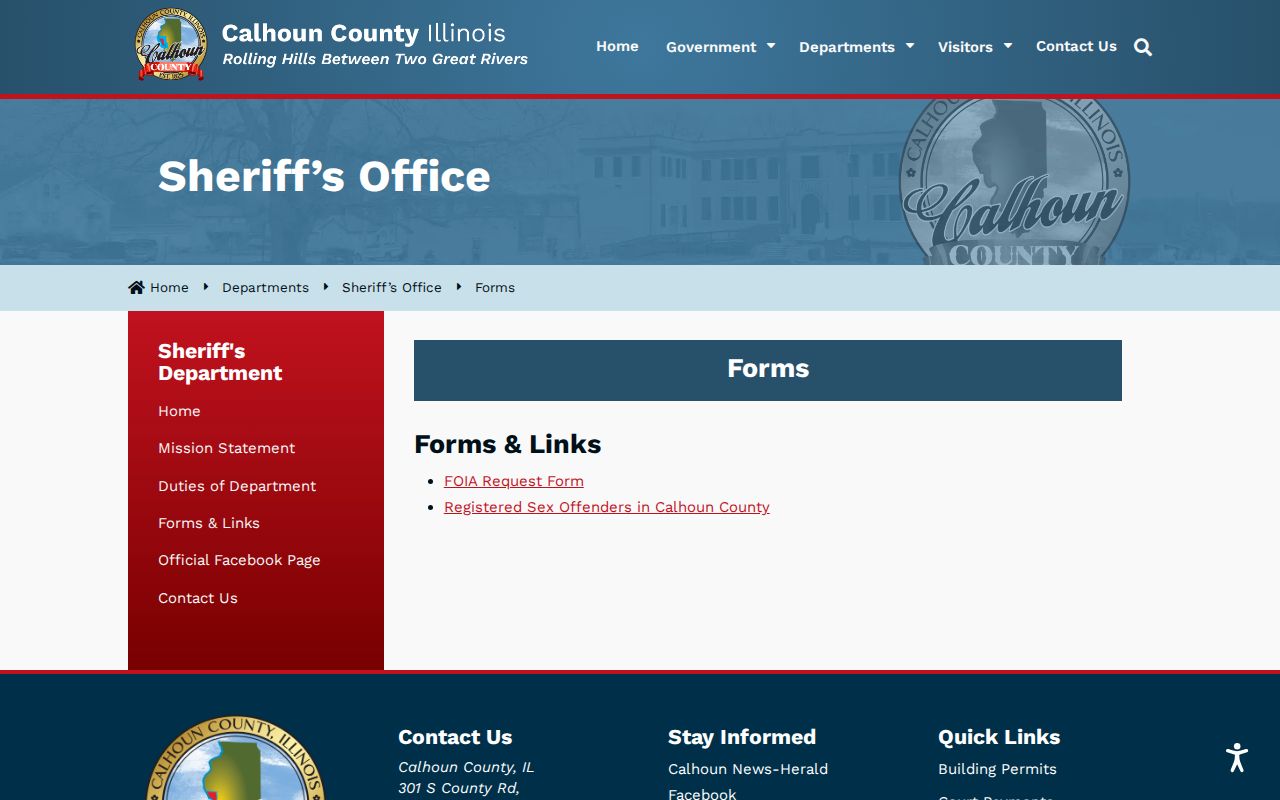
That local handoff helps readers avoid unofficial databases whose dates, addresses, or status labels may be stale.
Calhoun County Registry Filters
A broad Calhoun County registry query is useful for community awareness, but it should be treated as a starting set rather than a final identity decision. Open the official interface, choose Calhoun in the County field, and review the returned profiles one at a time. If a person may live near a county boundary or has moved, repeat the search by name and use the national layer described below.
The official ISP search screen illustrates the available filters without singling out a private person.
Use fewer fields first. A narrow spelling, old ZIP code, or wrong birth date can hide a relevant result.
Note: A missing Calhoun County result does not prove that no registration record exists in Illinois or another state.
How to Search the Illinois Offender Registry
The Illinois State Police operates the public registry under the Sex Offender Community Notification Law. Its disclaimer must be accepted before the search tools open. For a Calhoun County sex offender search, begin with the least data needed to separate likely matches, then confirm the full public profile.
- Open the ISP registry and accept its conditions of use. Read the accuracy and safety notice before continuing.
- Enter a first and last name, or select Calhoun County. City, ZIP, birth date, and status can narrow a broad set.
- Compare the result list by more than name. Check the photograph, age data, physical description, address status, and registering agency.
- Open the full profile. Review offense, conviction, vehicle, mark or tattoo, compliance, and reporting-date fields together.
| Field Label | Type | Required | Notes |
|---|---|---|---|
| First Name / Last Name | Text | No | Recommended broad starting pair |
| Date of Birth | Date or text | No | Useful for separating similar names |
| City / ZIP Code | Text | No | Geographic filters that may reflect mailing data |
| County / Special Location | Dropdown | No | Choose Calhoun, incarcerated, or out of state |
| Status / Homeless / Offender Type | Dropdown and checkbox | No | Narrows statutory and compliance categories |
| Neighborhood Map | Address or map click | No | Opens marker details in a side pane |
Calhoun County Map Markers
The neighborhood map accepts an address or a point selected on the map. Its side pane opens details for a marker. A marker is not a finding about the current risk posed by a person, and a plotted point should not be read beyond the fields the registry supplies. Use it to identify a profile for closer review, not to draw conclusions about a whole road, household, or village.
The ISP registry disclaimer explains the limits that apply before a Calhoun County sex offender search.
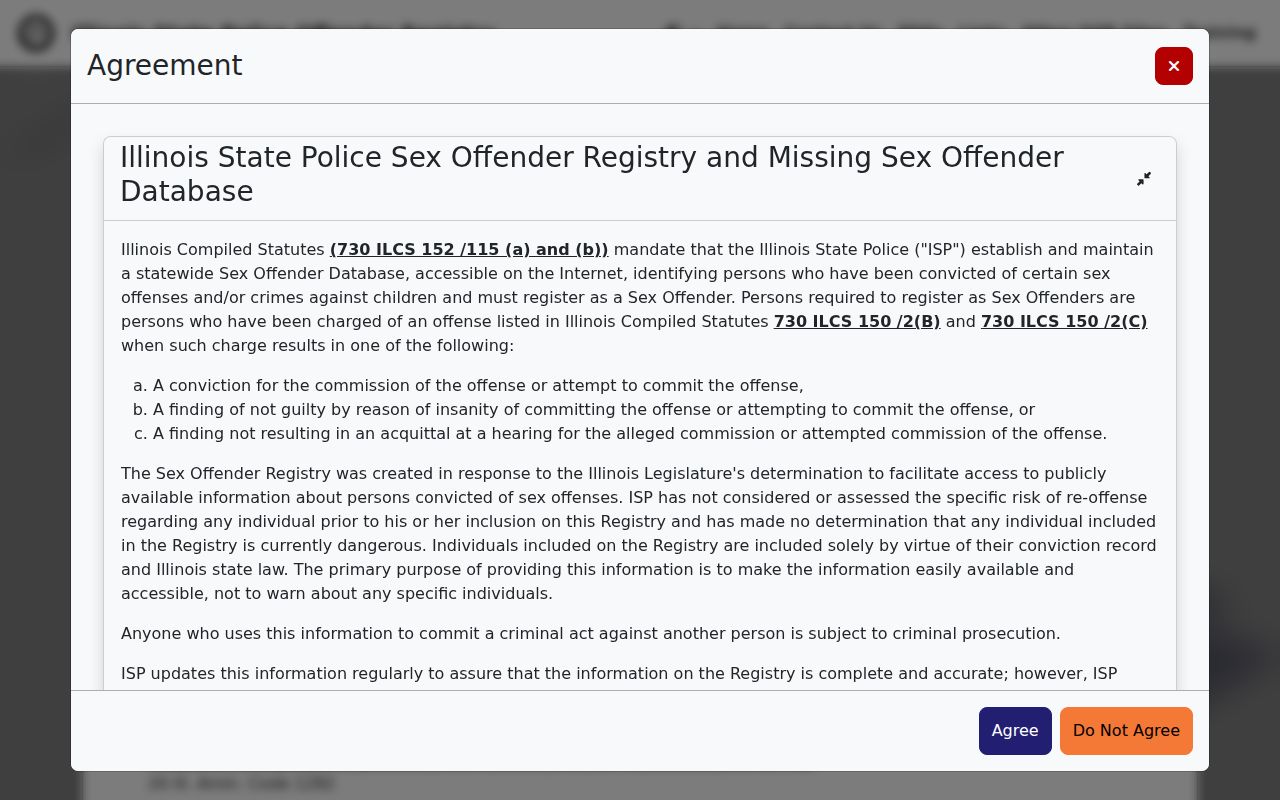
The disclaimer is part of the search process because registry data can change and must be used for lawful safety purposes.
Inside a Calhoun County Registry Profile
An Illinois public profile combines identity, case, location, and compliance data. The fields are more useful when read as a set. An address may show homeless, incarcerated, or out-of-state status instead of an ordinary residence. The registering agency helps identify the office responsible for the listed registration. The qualifying offense and conviction county describe why registration exists, while reporting dates and compliance status describe the current registry record.
| Name and Aliases | Published names used to distinguish the listed individual |
|---|---|
| Photo and Description | Birth or age data, sex, race, height, weight, hair, eyes, scars, marks, and tattoos |
| Location | Address or homeless, incarcerated, or out-of-state status, plus certain public work or school data |
| Offense and Conviction | Offense, statute, conviction county, conviction details, and offender or victim ages when public |
| Vehicles | Vehicle descriptions and plate information reported under Illinois registration duties |
| Registration Status | Statutory category, compliance, registering agency, and registration or reporting dates |
Calhoun Registration Forms Versus Profiles
The public web profile is not the actual registration form. Illinois law requires a registrant to give detailed information in person, including vehicle and distinguishing-mark data under 730 ILCS 150/3. Public disclosure is controlled by separate law. A person seeking an existing registration form must ask the law-enforcement agency where the individual registered, then allow that custodian to apply any required redactions.
This distinction matters in Calhoun County. The web result answers a public awareness question, while the Sheriff or other registering agency controls the underlying agency record. Do not assume every form field will appear online or that a screenshot is a certified agency record.
The official Illinois Sex Offender Registration Act image provides the statutory basis for those in-person duties.
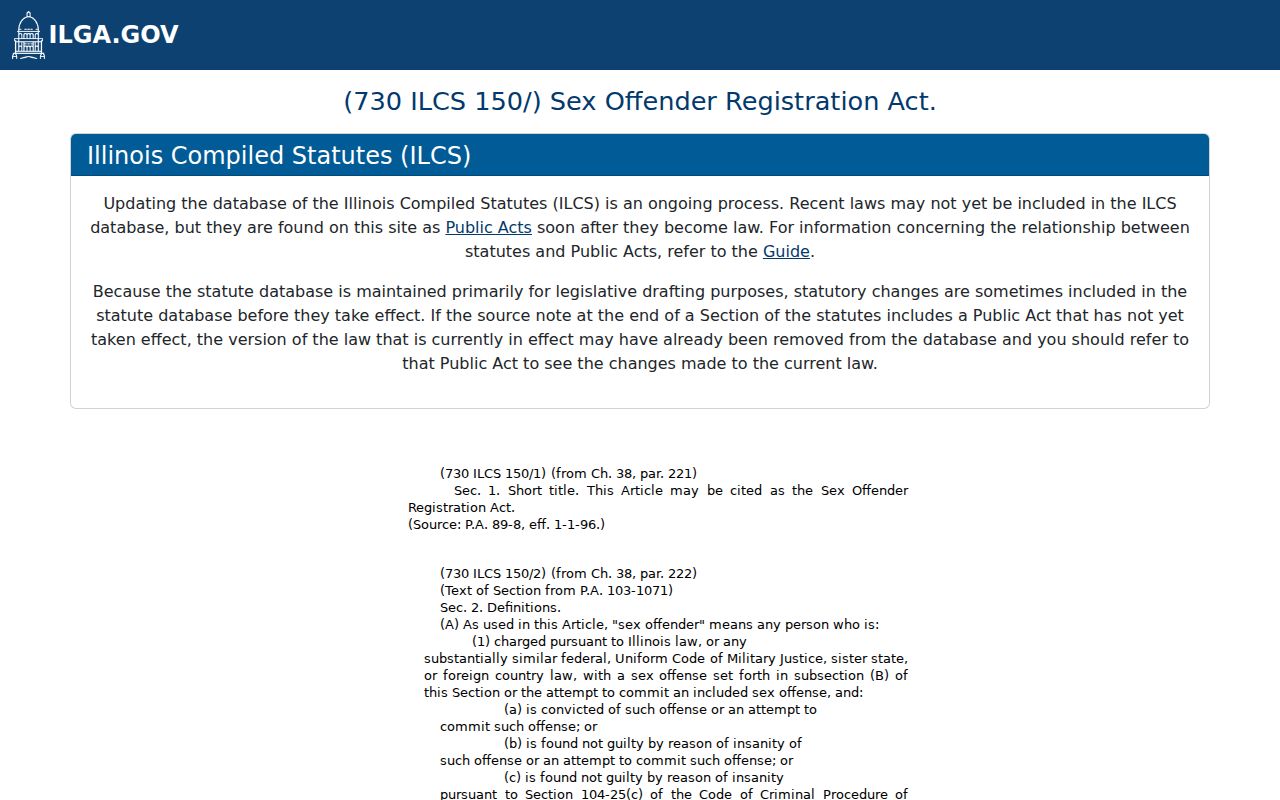
The statute also covers changes, verification, and penalties, which cannot be reduced to one profile label.
Illinois Registration Levels and Requirements
Illinois does not display its system as a simple federal Tier I, II, and III ladder. Public profiles instead use Illinois statutory categories. Under 730 ILCS 150/7, some duties last ten years, while sexual predators, sexually violent persons, released sexually dangerous persons, and certain repeat registrants register for life. Time can be extended or tolled, meaning the clock can pause, after reconfinement or noncompliance.
| Illinois Category | Duration | Reporting Pattern |
|---|---|---|
| Sex offender outside a lifetime rule | Generally 10 years after conviction if not confined, or after parole, discharge, or release if confined | Annual reporting is common, plus required change reports |
| Sexual predator or sexually violent person | Natural life | Specified categories report every 90 days |
| Released sexually dangerous person | Natural life | Frequent verification and change duties apply |
| Certain repeat registrants | Natural life | Schedule depends on the statutory category |
| Failure or noncompliance | Statutory 10-year extension | Noncompliance can also lead to criminal penalties |
| Reconfinement | Extension or tolling under section 7 | Release changes when the active period resumes |
Calhoun Searches Across State Lines
The ISP registry is the right source for Illinois entries. When a Calhoun County search involves a recent move or a neighboring state, add the U.S. Department of Justice National Sex Offender Public Website. NSOPW queries participating jurisdictions, but it does not replace the source registry. Open the state or territory profile behind a result and compare the public identifiers there.
The national portal shown below adds geographic reach to a Calhoun County sex offender search.
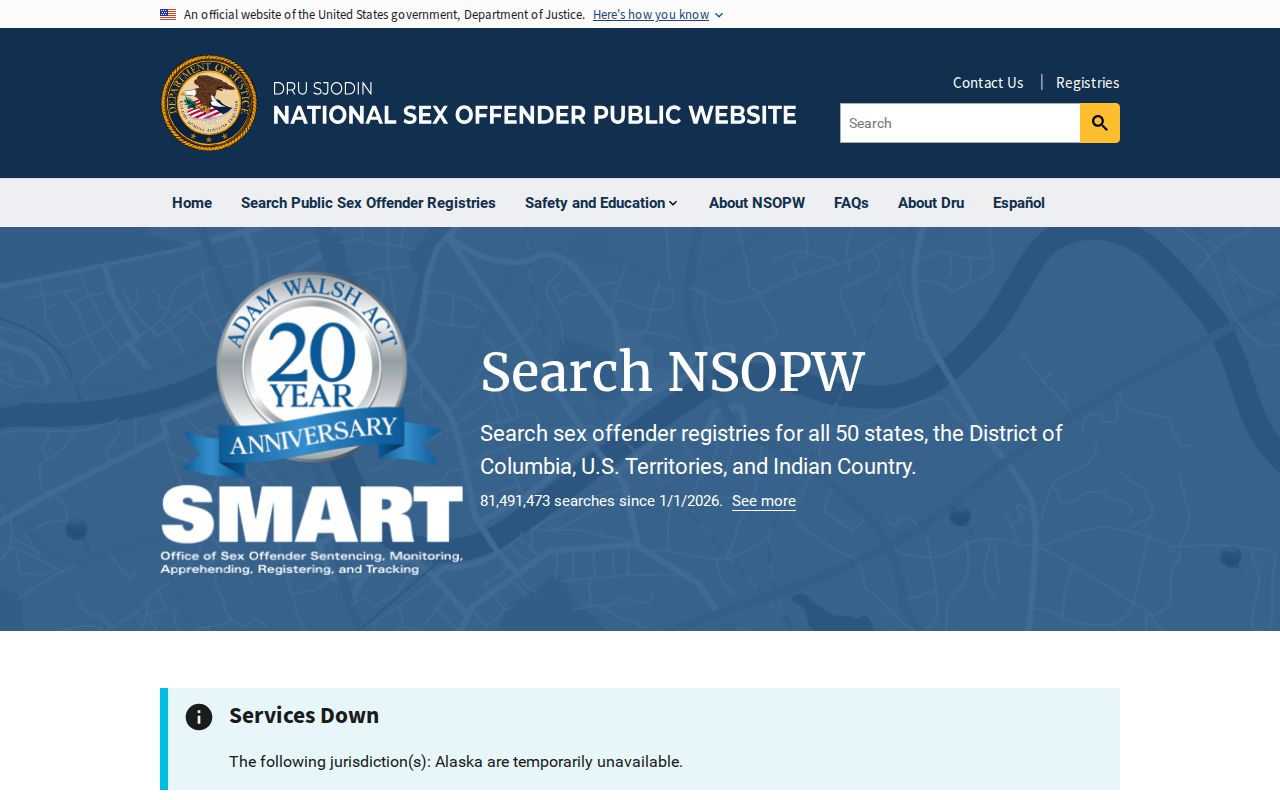
A national result should still be verified through the jurisdiction that maintains the registration record.
Calhoun Registry Time Is Not Simple
A ten-year label does not mean ten calendar years from the day a person first appears online. Illinois measures the period from conviction when the person was not confined, or from parole, discharge, or release when confinement occurred. Reconfinement can change the calculation. Failure to comply can add a statutory ten-year extension. These rules explain why two Calhoun County profiles tied to offenses from similar years may remain public for different periods.
The official registration-duration provision is the source for the comparison.
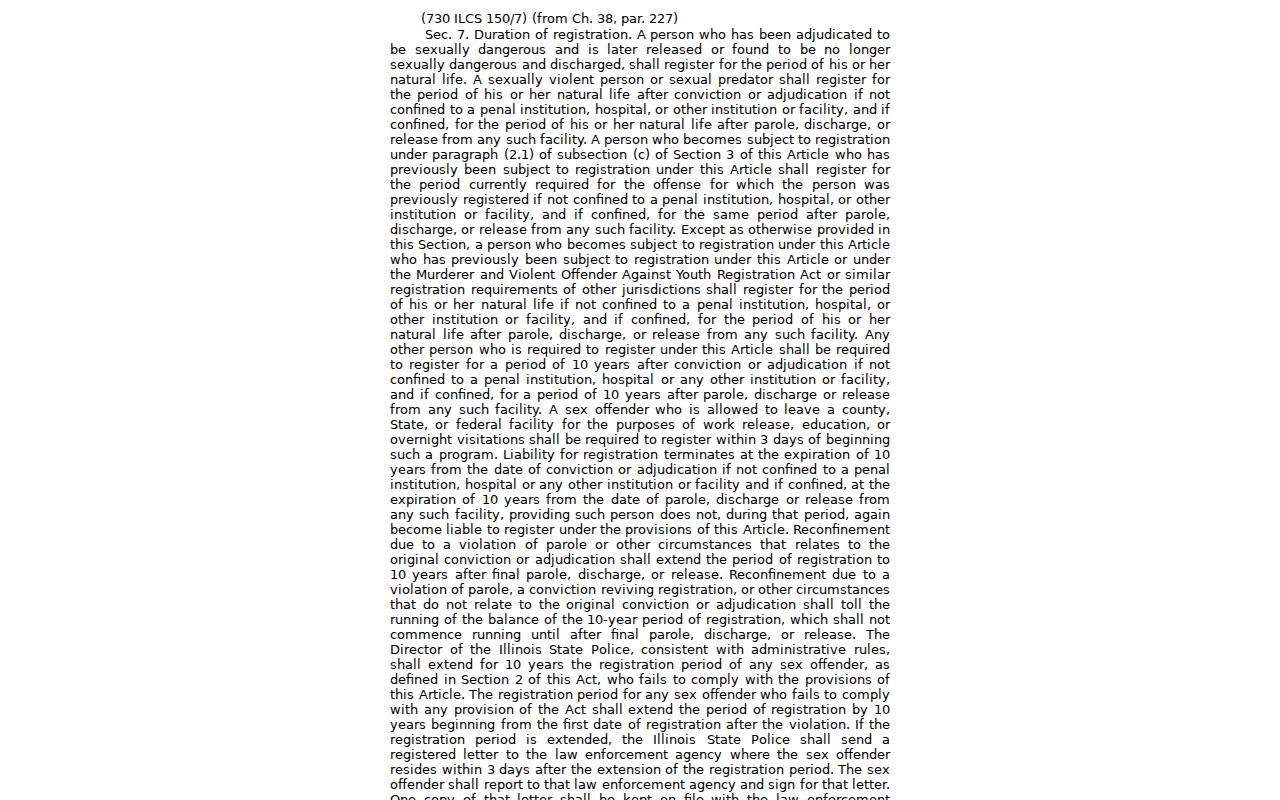
For a case-specific calculation, rely on the registering authority and qualified legal advice, not a date estimate from a search result.
Community Notification and Lawful Use
The public database exists for community notification and safety awareness under 730 ILCS 152/115. Use it to understand a verified public record and to make calm personal or family safety plans. Daily updates help, but they do not remove the need to match identity fields or to confirm a concern with the agency that maintains the registration.
If a Calhoun County profile appears noncompliant, has an address that seems wrong, or conflicts with an official fact, report the concern to law enforcement. Do not investigate at a home, contact a household, post threats, or try to enforce registration rules yourself. The Calhoun County Sheriff can receive a local report and determine whether another police agency or ISP should handle it.
Do not confront or harass anyone. Misusing Illinois registry information to threaten, intimidate, or harass a registrant or household can be a crime. Report suspected violations to law enforcement.
Note: Registry status is not permission for vigilantism, discrimination, or contact with the listed person, family members, neighbors, or property occupants.