
Checking Calhoun County Criminal History
Begin with the event or outcome you need, not with a broad name search. A sheriff-created report belongs with the Calhoun County Sheriff's Office. A filed misdemeanor, felony, traffic, or ordinance matter belongs with the Circuit Clerk. State conviction information comes from Illinois State Police, while a person reviewing their own fuller state record should use Access and Review.
Gather the full name, known spelling variants, an approximate event or filing year, and a case, incident, or booking number if one is known. Date of birth can help distinguish people, but public offices may limit personal identifiers. The official county site pictured below is a useful directory, not a consolidated criminal-record portal.
The official Calhoun County website identifies the county offices that hold local records.
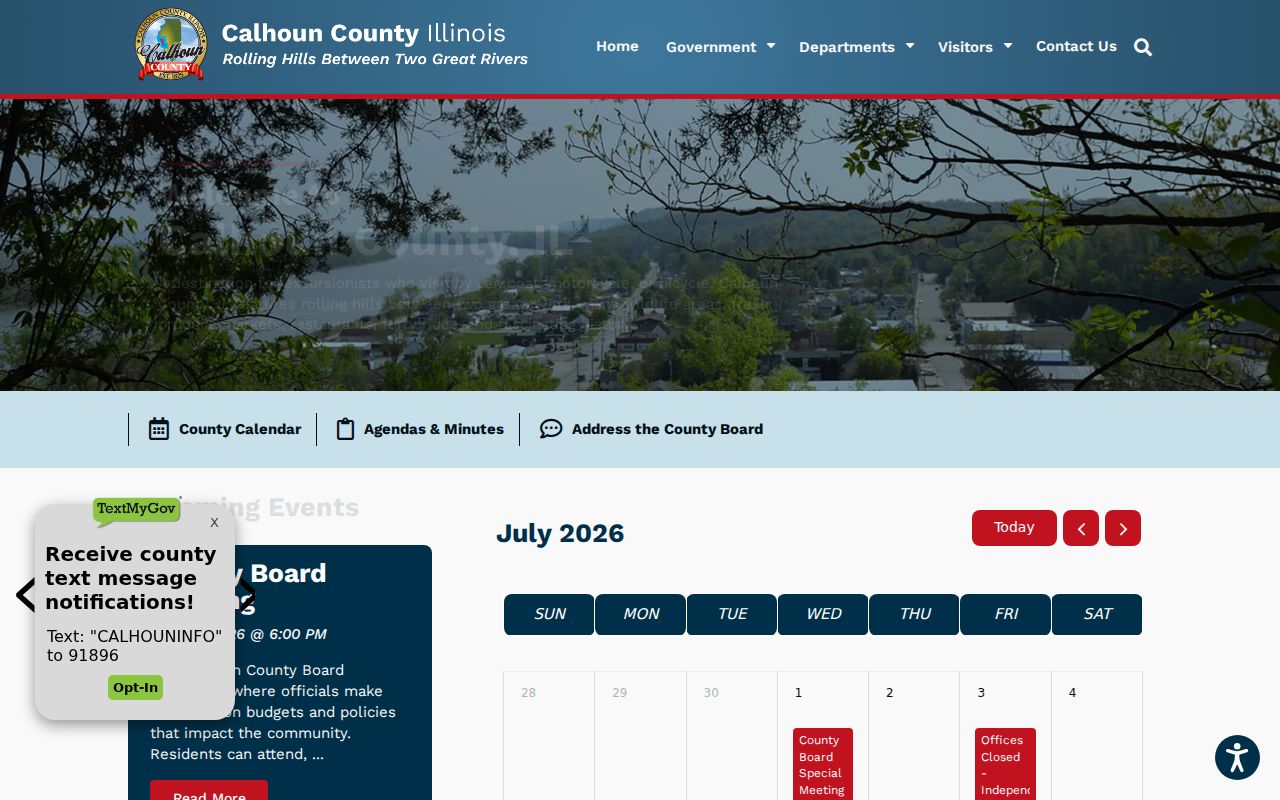
Its department pages lead to the sheriff, Circuit Clerk, State's Attorney, probation office, and county FOIA route used in a complete search.
- Identify whether the needed item is an incident, arrest, court, conviction, custody, probation, or registry record.
- Contact the creating office, giving a name plus the date, place, and record number when available.
- Use the Circuit Clerk or its listed online-record route to trace filed charges and the final disposition.
- Use the appropriate ISP process for Illinois conviction information or review of your own fingerprint-based record.
- Ask the originating office for a copy or certification when an official document, rather than a screen result, is required.
Calhoun County Records Use Two Buildings
Hardin concentrates the county justice offices, but the counters are not all in one building. The Calhoun County Courthouse at 101 N. County Road holds the Circuit Clerk and State's Attorney. The Marvin Richter Government Building at 301 S. County Road houses the Sheriff. Probation uses a third address, 101 N. Main Street. A visitor looking for a case judgment at the sheriff's counter, or an incident report at the clerk's counter, has started with the wrong custodian.
Circuit Clerk
101 N. County Road, P.O. Box 486, Hardin, IL 62047
618-576-2451 ext. 1
Case files, dockets, orders, and dispositions
Calhoun County Sheriff
301 S. County Road, Hardin, IL 62047
618-576-2417
Incident, arrest, booking, jail, dispatch, and warrant-service records
County FOIA Officer
101 N. County Road, P.O. Box 501, Hardin, IL 62047
618-576-9013
Written county public-record requests
Note: The clerk page clearly publishes Friday hours but not a full weekday schedule, so call before traveling to Hardin.
Illinois Official Background Checks
The Illinois State Police Bureau of Identification is the state's central criminal-history repository. Under the Uniform Conviction Information Act, its name-based product concerns publicly disseminable Illinois conviction information. It is not the same as a complete fingerprint transcript, a Calhoun County case file, or a sheriff report.
The Criminal History Information Response Process, or CHIRP, is the electronic UCIA channel. Its current login warns that access requires a State of Illinois Digital ID and is limited to law-enforcement agencies or organizations with an ISP User's Agreement. Readers should not treat it as an open anonymous search box. The current ISP fee is $10 for an electronic name inquiry and $16 for a manual inquiry.
The ISP name-based criminal-history page explains the official conviction-information channel.
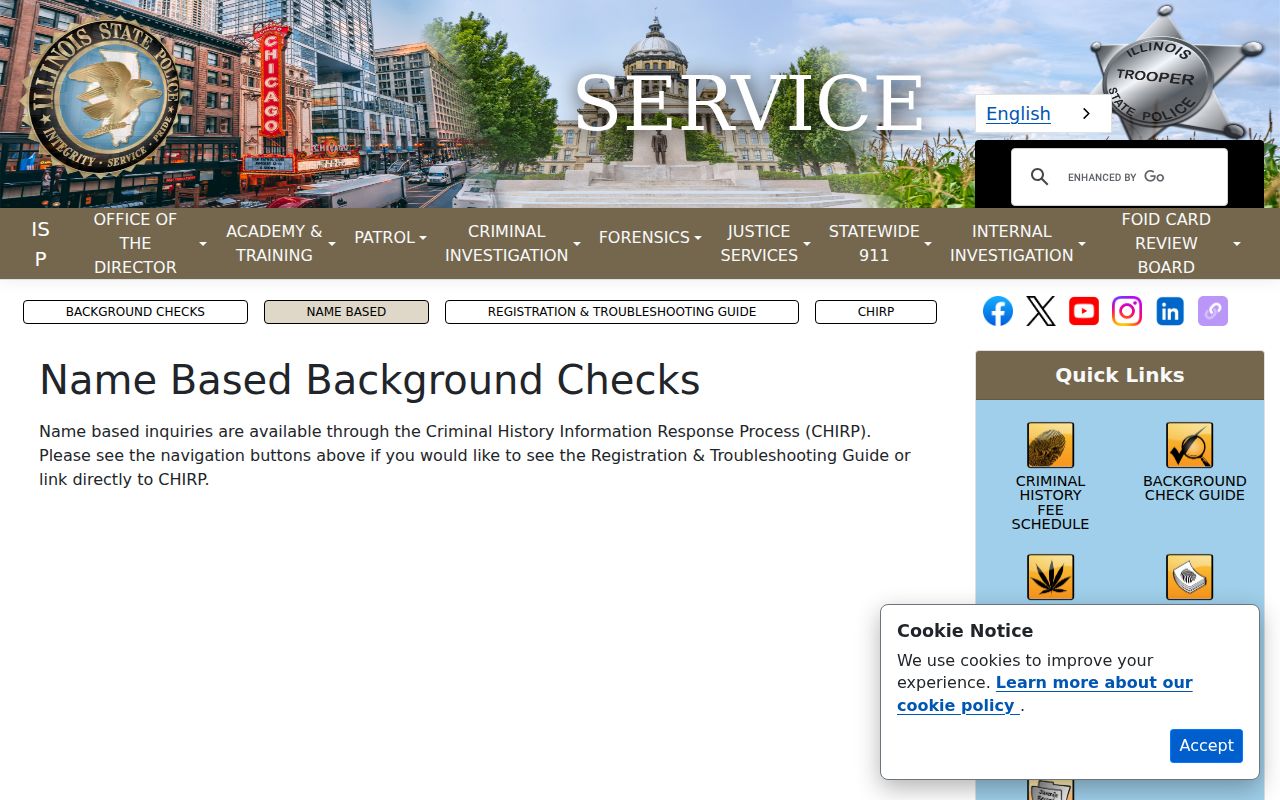
This state product can confirm reported Illinois convictions, but the underlying Calhoun County court file remains the better source for the pleadings, docket, and final order.
| Official route | Best use | Access or cost |
|---|---|---|
| Electronic UCIA inquiry | Publicly disseminable Illinois conviction information | $10; CHIRP access requirements apply |
| Manual UCIA inquiry | Name inquiry handled manually by ISP | $16 |
| Access and Review | Review your own fuller fingerprint-based Illinois record | No ISP processing fee; fingerprint provider may charge |
The ISP criminal-history fee schedule confirms the current electronic and manual inquiry charges.
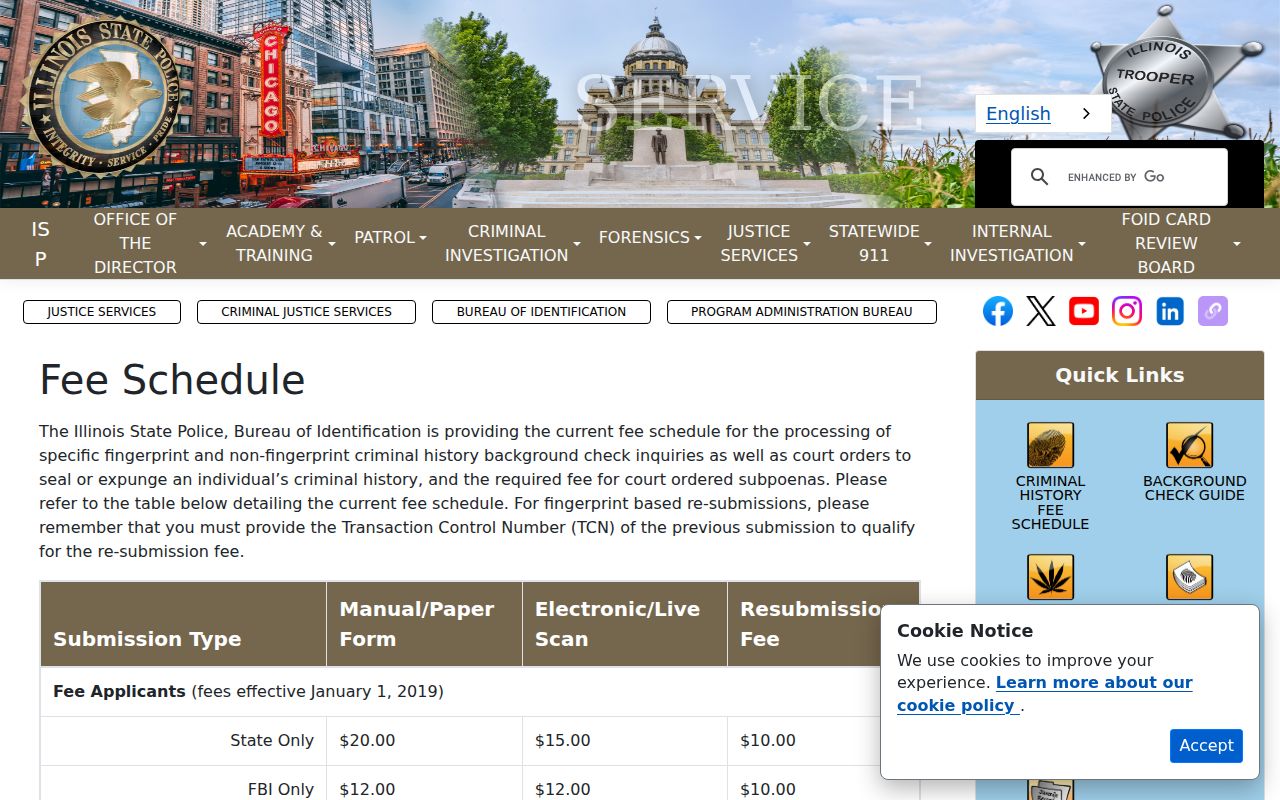
Check that schedule before submitting because the service selected determines the amount and the kind of state record returned.
Review Your Own Calhoun County Record
Access and Review is the correct ISP route for a person who wants to inspect their own Illinois criminal-history transcript. Fingerprints may be captured by an ISP-licensed live-scan vendor or a participating Illinois law-enforcement or correctional facility during business hours. ISP does not charge to process Access and Review or a Record Challenge, though the fingerprint provider may set a capture fee.
The ISP Access and Review instructions explain the personal-record and correction process.
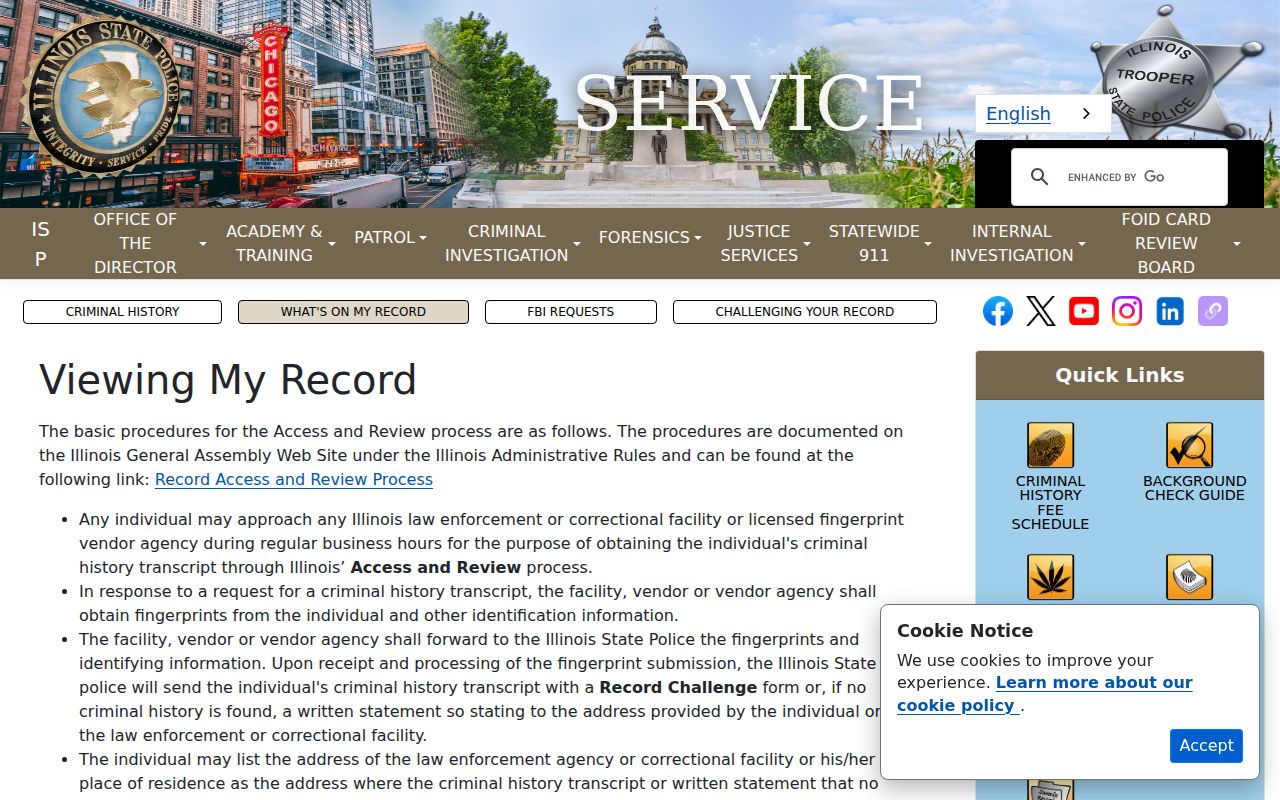
The response includes a Record Challenge form. That route is useful when a disposition appears missing, identifying data are wrong, or two records may have been matched in error. Start with the source of the disputed entry: the clerk can verify a court outcome, and the sheriff can verify its own arrest data.
Calhoun County Criminal Record Types
A criminal event creates related records at different times. The investigating agency records what was reported and what officers did. Custody adds booking information. The State's Attorney decides what charge, if any, to file, and the Circuit Clerk then opens the court case. ISP links qualifying arrest and disposition data at the state level. IDOC creates another record only when state custody or parole is involved.
- Incident and arrest records: the Sheriff holds records it created, including reports, arrest sheets, dispatch entries, and evidence records.
- Criminal court files: the Circuit Clerk maintains complaints or informations, dockets, hearings, orders, judgments, and sentences.
- Conviction information: ISP disseminates qualifying Illinois conviction data through the UCIA process.
- Warrants: the Sheriff serves warrants, while the clerk file can show a court-issued bench warrant or later court action.
- Supervision and registry records: county probation, IDOC, the Prisoner Review Board, and the ISP registry hold distinct records.
Calhoun County FOIA Fills Portal Gaps
Calhoun County publishes no county inmate search, booking blotter, warrant lookup, or government-hosted criminal-case interface. The county's written process under the Illinois Freedom of Information Act is therefore a central access channel. Requests may be mailed, emailed, faxed, or delivered in person to FOIA Officer and State's Attorney Lucas J. Fanning. The county form helps organize a request, but it is optional.
Name the existing record instead of asking an office to answer a question or create a new compilation. For a report, provide the agency, date and time range, location, incident or booking number, and the exact parts sought. Those may include the initial report, supplements, arrest sheet, booking entry, inmate log, dispatch entry, photos, or releasable audio and video.
The Calhoun County FOIA page publishes its submission channels, timing, and fees. Written requests are normally answered within five business days, subject to a lawful extension. Mixed records should be redacted and released in part when only some information is exempt.
| Standard paper copies | First 50 black-and-white letter or legal pages are free; additional pages are 15 cents each. |
|---|---|
| Color or oversize copies | Actual reproduction cost may be charged. |
| Electronic records | Actual cost of the recording medium may apply. |
| Certification | $1 per record. |
| Commercial requests | Separate timing and fee provisions may apply. |
Inside a Calhoun County Criminal Record
The content depends on the custodian and stage of the case. An arrest entry may show the alleged offense at intake, while the filed court charge may differ after prosecutor review. A final judgment answers a different question from both. Compare names and identifiers, then read the disposition rather than treating an arrest label as an outcome.
| Name and identifiers | Name, aliases, birth data, physical description, or agency identification numbers, subject to access limits. |
|---|---|
| Arrest and booking data | Arresting agency, time, place, alleged offense, booking details, bond information, and release or transfer status. |
| Charges and statutes | The filed offense description, Illinois statute citation, class, count, and amendments recorded by the court. |
| Disposition | Dismissal, acquittal, guilty plea, conviction, or another final result shown in the docket and judgment. |
| Sentence | Custody, probation, financial assessments, and conditions stated in the sentencing order. |
| Custody or supervision | Local booking status, IDOC location and status, parole information, or county probation records held by separate offices. |
Calhoun County Arrests Become Case Files
The records sequence explains why dates and charge labels can conflict without either source being false. The Sheriff, ISP, conservation police, or another authorized agency first creates an incident or arrest report. Custody produces a booking entry or transfer record. Fingerprintable information may then reach ISP and connect to an Illinois identity record.
Record flow: Incident or arrest › Booking or transfer › Prosecutor review › Circuit Court filing › Docket and hearings › Disposition and sentence › State repository update
The State's Attorney can file an offense different from the arrest description. The arrest time marks the start of custody, the filing date marks the start of prosecution, and the disposition date marks the end of a charge. For the deeper court trail, use the Calhoun County criminal court cases page.
Public Access Laws in Illinois
Illinois law separates local public records, state conviction dissemination, criminal-history maintenance, sealing, and registry publication. Access is not absolute. Juvenile files, sealed or expunged matters, victim information, active-investigation details, and other protected material may be withheld or redacted. An office that denies part of a request should identify the legal basis and release nonexempt portions when possible.
Key statutes:
5 ILCS 140 governs requests for local public records and the exemptions that can limit disclosure.
20 ILCS 2635 governs public dissemination of Illinois conviction information under UCIA.
20 ILCS 2630 governs the state criminal-history system and expungement or sealing procedures.
730 ILCS 150 establishes registration duties for people covered by the Sex Offender Registration Act.
Calhoun County Custody Has No Roster
The Sheriff's duties include detention and prisoner transport, but no current online county roster or booking log was located. Call 618-576-2417 to ask whether a person is in local custody, has been released, or was transferred. Because the only published capacity reference found is an older two-bed listing, the current place of detention should always be confirmed. No transfer destination should be assumed.
Illinois VINELink can supplement a phone inquiry and provide custody notifications. It is not the source for a final court result. If a person enters state custody, use the IDOC Individual in Custody Search. IDOC may publish the name, IDOC number, parent institution, current location or status, vital statistics, admission and release dates, and sentencing information. Federal custody is checked through the Bureau of Prisons locator.
Note: A missing roster result does not prove release, dismissal, or the absence of a Calhoun County criminal record.
Sealed, Expunged, and Restricted Records
Illinois provides expungement and sealing chiefly through 20 ILCS 2630/5.2, with distinct rules for eligibility and the effect of each remedy. Expungement generally removes eligible records through the statutory process, while sealing restricts ordinary public access without erasing every authorized government use. Juvenile matters follow separate access and relief rules, and some cannabis records have an automatic-relief path.
The Illinois Courts expungement and sealing forms are the official starting point for current statewide paperwork.
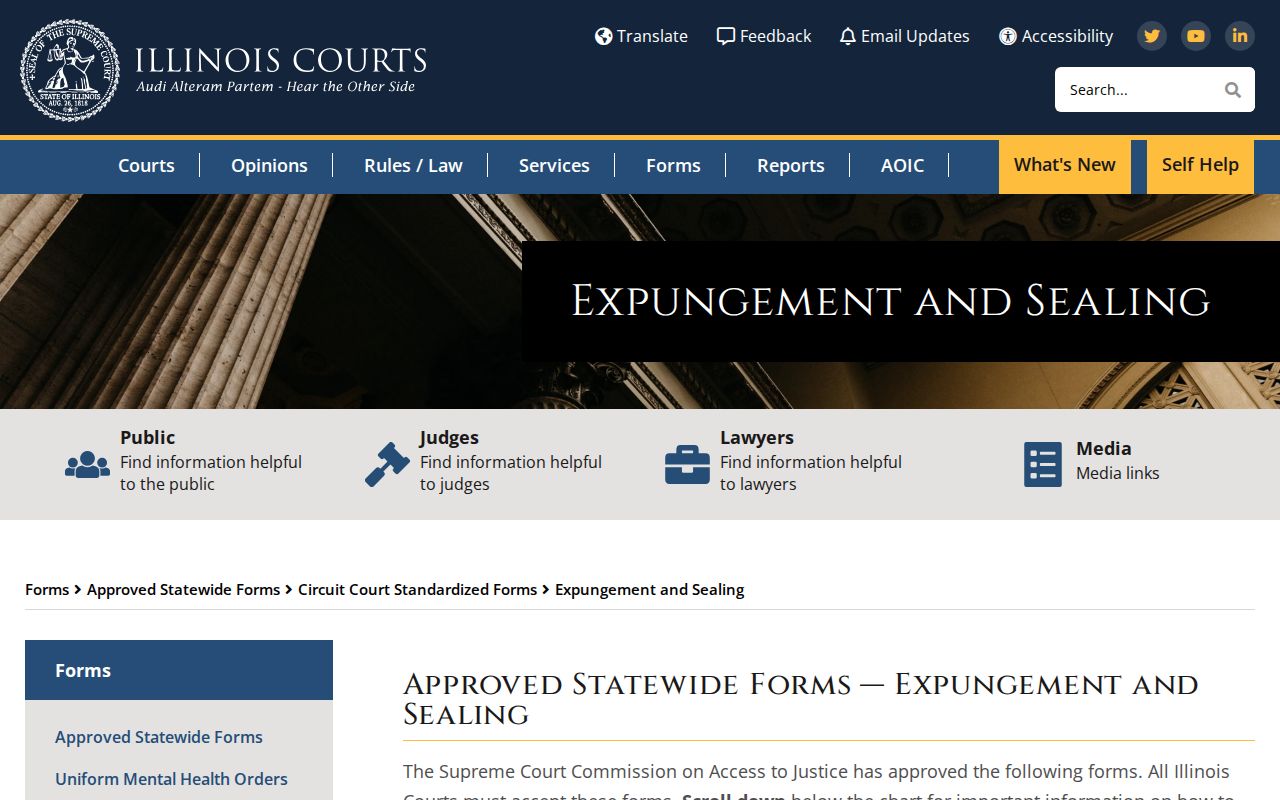
As of July 2026, courts use revised statewide forms, and updated juvenile-expungement forms also apply to that separate process. When a public search no longer displays a matter, the absence may reflect sealing, restricted access, incomplete vendor coverage, or a data delay rather than proof that no record ever existed.
CHIRP Is Not a Calhoun County Docket
CHIRP reports the ISP conviction-information product; it does not replace the Circuit Clerk. The login itself currently limits access to eligible organizations with a User's Agreement and Illinois Digital ID. Even an authorized name inquiry can miss the narrative report, unfiled arrest details, court motions, and documents that explain how the case ended.
The CHIRP authentication page displays those entry requirements.
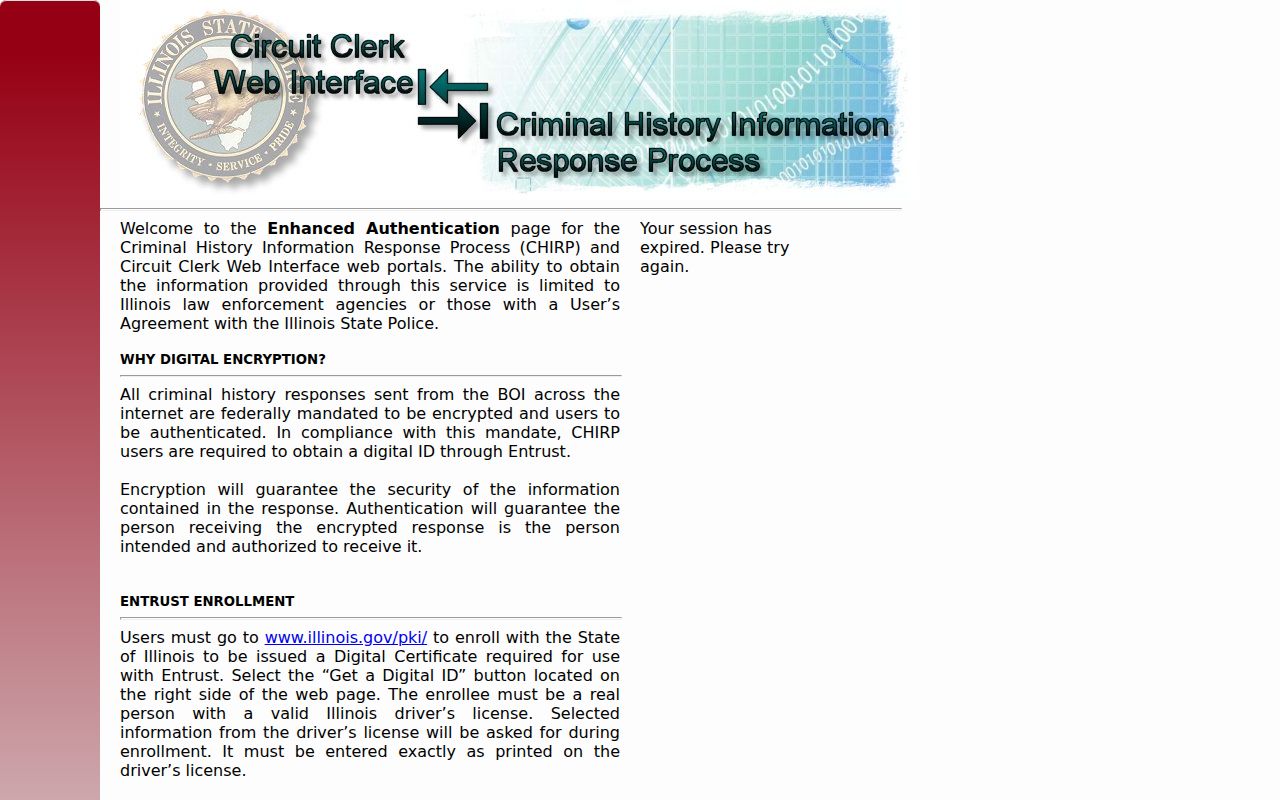
Use the Calhoun Circuit Clerk for the authoritative local docket and certified court papers. The Illinois Courts directory points Calhoun searches to a county-specific Judici route, but Judici is privately operated and a CAPTCHA prevented verification of its exact search fields. Call the clerk when an online search fails.
Calhoun County Criminal Records by City
Calhoun County's three largest incorporated places are villages. None has a confirmed standalone criminal-record portal or separate municipal court. Hardin contains the county counters; residents of Kampsville and Batchtown may use mail, email, phone, or the Hardin offices. The 2020 Census counts shown below preserve the official vintage and should not be read as current estimates.
Hardin Criminal Records
801 residents in 2020. The Sheriff and Circuit Clerk are separate Hardin counters.
Kampsville Criminal Records
310 residents in 2020. County phone, mail, and FOIA channels avoid an unnecessary trip.
Batchtown Criminal Records
170 residents in 2020. Identify the responding agency before requesting the report.
Calhoun County Geography Shapes Access
Calhoun County lies between the Mississippi and Illinois Rivers and covers 253.83 square miles of land. The 2020 population was 4,437, and the Census reported 17.5 residents per square mile. With a mean commute of 47.7 minutes and most justice offices centered in Hardin, remote request options have practical value. Confirm counter hours by phone, then use email or mail when inspection is not necessary.
Records have deep local importance. Calhoun County was established in 1825, and the seat moved from Gilead to Hardin after the 1847 courthouse fire. The county reports that townspeople saved every document from the fire. Its bicentennial records project sought to locate, preserve, index, and publicize historic materials, a useful reminder that older records may follow archival rather than modern electronic paths.
The official county history describes the courthouse fire and preservation effort. For historical or genealogical work, ask the clerk which index covers the period and whether the record remains at the courthouse or has moved to an archive.
The ISP Bureau of Identification overview shows the state repository that now receives qualifying justice-system data.
That state system complements, but does not replace, the preserved local court and sheriff records kept in Calhoun County.